Your own AI assistant over company documents: how RAG works and when it pays off

A chatbot that knows your price list is useful. One that invents it is expensive.

SHORT ANSWER

RAG (retrieval-augmented generation) connects a language model to your own documents. Documents are split into chunks, turned into vectors and stored in a database; on each question the system retrieves the closest chunks and passes only those to the model as context. Answers are then grounded in your content and can cite a source. RAG pays off where knowledge is scattered across files and changes often.

  • The model is not retrained — documents are attached to the question as context.
  • Every answer can point to the file and passage it came from.
  • Updating knowledge means replacing a file, not another training run.
  • Answer quality depends mostly on document quality and chunking.
  • Permissions must be enforced at retrieval time, not in the prompt.
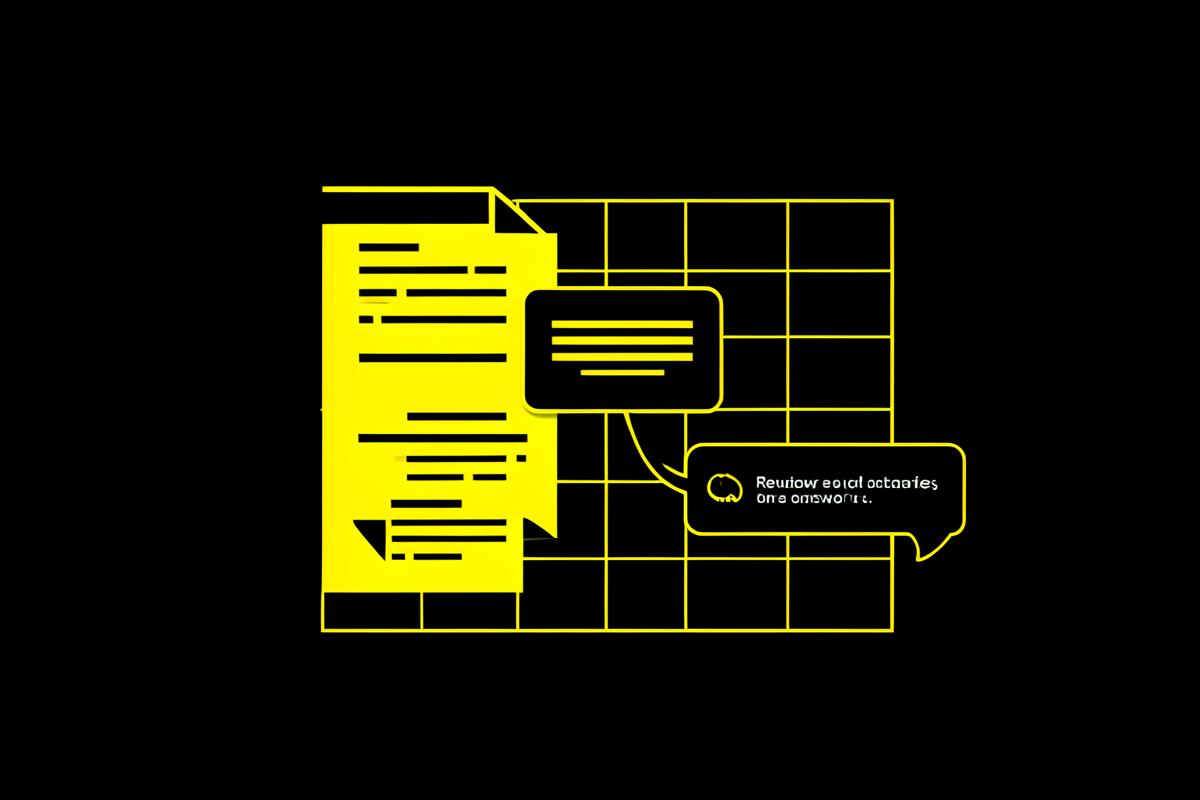
Illustration: documents feeding a vector database and a chat answer

In plain words: what happens underneath

Picture an assistant who, before answering, runs to the binder, pulls the two right pages and speaks from those. That is RAG: a search engine bolted onto a model.

The model does not know last week's price list. Give it that exact page and it answers correctly and shows where it came from.

When it pays off

It pays off when people burn time searching: warranty terms, complaint procedure, the rate for a specific client, a machine manual. One assistant instead of five Slack pings.

It does not pay off when you have ten documents that fit in one PDF. A decent search box or a plain FAQ page is enough.

Where it breaks

The usual problem is messy files: three price list versions, two “final” folders, scans with no text layer. The assistant will not tidy that up — it will repeat the mess, faster.

The second problem is permissions. If everyone queries the same index, somebody eventually pulls a contract they should not see. The filter belongs at retrieval time.

How to start cheap

Pick one document set and one question that comes up daily. Build the assistant for that alone, run it for a week, count the time saved. Expand later — or drop it without regret.

  • RAG
  • LLMs
  • AI for small businesses

If part of your business still feels stuck in 2005, we should probably talk.

20 minutes. No pitch deck. We'll ask about your business, you'll ask us anything, and by the end of the call you'll know whether this makes sense for you.

(Worst case: 20 minutes of free advice. We can live with that.)

Email: hello@mocne.ai